How to Remove Common Sofa Stains (and When to Call a Pro)
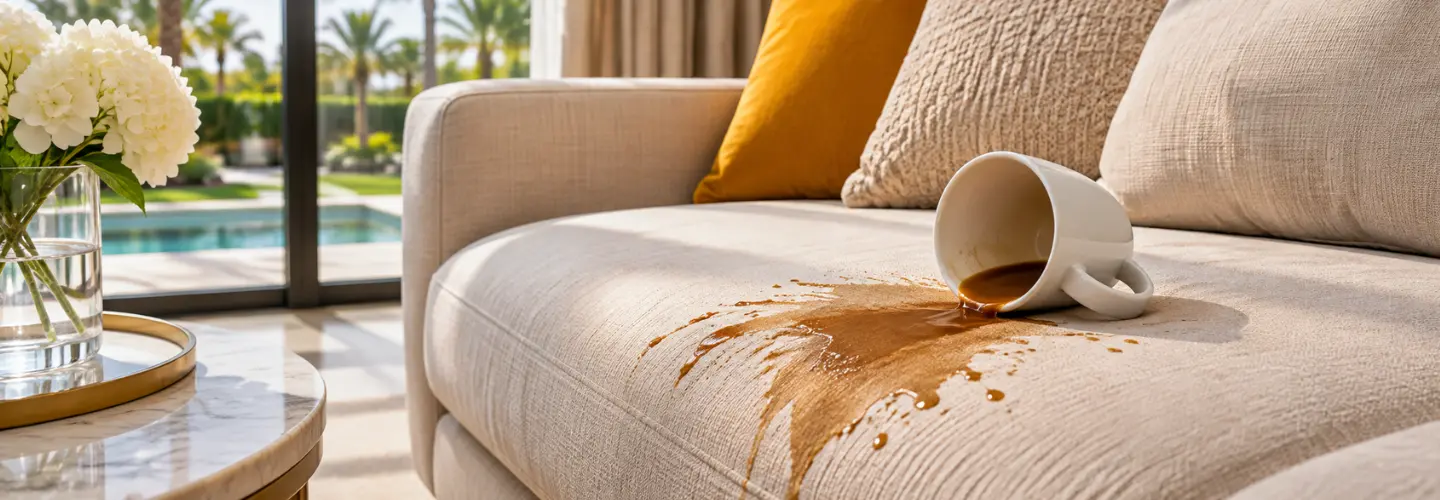
A spilled coffee, a dropped plate of biryani, a pen left on the cushions, or a pet accident: sofa stains happen in every home. The way you react in the first few minutes decides whether the mark lifts out or stays for good.
This guide shows you how to remove stains from a sofa safely, starting with the fabric code that tells you which cleaners you can use. You will find step-by-step methods for the most common stains, the mistakes that make marks worse, and the signs that it is time for professional sofa cleaning in Dubai. If you are already weighing up the cost, our guide to sofa cleaning prices in Dubai breaks it down by size.
How do you remove a stain from a sofa?
To remove a stain from a sofa, blot up as much as you can with a clean white cloth, check the fabric's cleaning code, test your cleaner on a hidden area, then dab the stain from the outside in using a small amount of the right solution. Rinse lightly, blot dry and let the area air-dry fully.
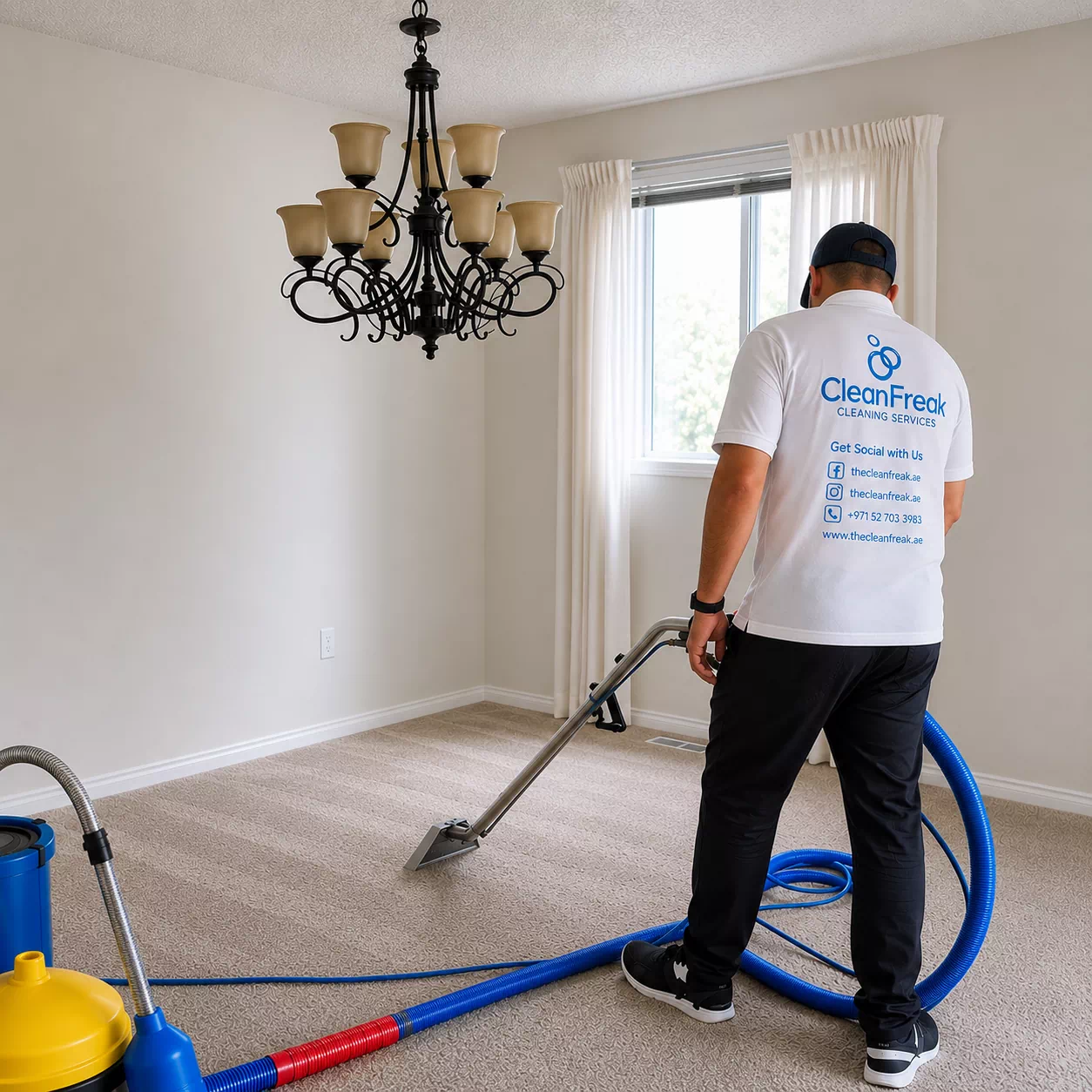
These same basic rules work on rugs and carpets too, so they are worth remembering for every soft surface in your home. For deeper marks on floors, our carpet cleaning service uses steam extraction to lift what home tools leave behind. And because stains and spills feed the bacteria and dust mites already living in fabric, our guide to dust mites and allergies in Dubai homes is a useful read if anyone at home has allergies.
Step one: check your sofa's cleaning code
Most fabric sofas have a care label under the cushions or the base. It carries a letter code that tells you what kind of cleaner is safe. Using the wrong one can leave rings, fade colour or damage the fibres.
Table 1 — Sofa cleaning codes explained
|
Code |
What it means |
What you can use |
|
W |
Water-based cleaning |
Mild soap and water, water-based upholstery cleaners |
|
S |
Solvent only |
Water-free dry-cleaning solvent; no water |
|
W/S |
Water or solvent |
Either method, used sparingly |
|
X |
Vacuum or brush only |
No liquids at all; call a professional for stains |
Leather sofas are different. They should be wiped and conditioned, not soaked or steam-cleaned. If there is no label, treat the sofa as delicate and test everything first.
The golden rules of sofa stain removal
• Act fast. Fresh stains are far easier to lift than dried ones.
• Blot, don't rub. Rubbing pushes the stain deeper and roughs up the fibres.
• Work from the outside in so the stain does not spread.
• Use as little liquid as possible. Over-wetting soaks the padding, and in Dubai's humidity that can lead to musty smells.
• Avoid heat. Hot water and hairdryers can set protein and sugar stains.
• Test first on a hidden spot, such as the back or underside of a cushion.
|
📊 Homes made up 55.4% of the UAE furniture market in 2025 IMARC Group values the UAE furniture market at USD 3.81 billion in 2025, with residential use as the largest segment. Sofas are among the most expensive pieces in most homes, so treating stains correctly protects a real investment. |
How to remove the most common sofa stains
Coffee and tea
1. Blot the spill straight away with a dry white cloth.
2. Mix a few drops of mild dish soap into a cup of cool water.
3. Dab the solution on, then blot. Repeat until no more colour transfers.
4. Finish by blotting with plain cool water, then a dry cloth.
Red wine, juice and soft drinks
Blot quickly, then dab with a solution of one tablespoon of white vinegar and a few drops of dish soap in two cups of cool water. Blot, rinse lightly with cool water and dry. Sugary drinks leave a sticky residue that attracts dust, so rinse the area well.
Grease, oil and food
Scrape off any solid food. Sprinkle cornflour or baking soda over the mark and leave it for 15 to 20 minutes to absorb the oil, then vacuum it away. Treat what remains with a little dish soap solution and blot.
Ink and pen marks
On fabrics coded S or W/S, dab a little rubbing alcohol onto a clean cloth (never directly onto the sofa) and blot the ink. Change to a clean part of the cloth often so you are not spreading it. Stop if the colour of the fabric starts to lift.
Pet urine and accidents
Blot as much as possible, then use an enzyme-based cleaner made for pet stains. Enzymes break down the proteins that cause odour. Avoid ammonia-based products, which smell similar to urine and can encourage pets to return to the same spot.
Body oil and sweat marks
Dark, shiny patches on headrests and arms come from skin oils and sweat. A dish soap solution helps with light marks, but these build up deep in the fabric over months and usually need hot-water extraction to lift fully.
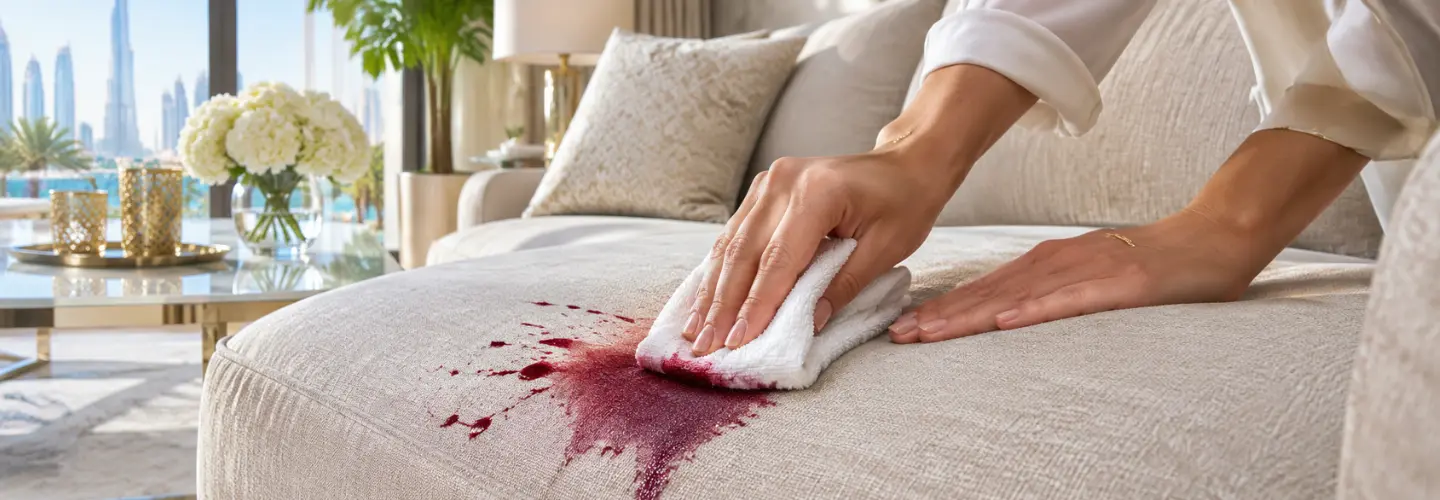
Table 2 — Sofa stain quick-reference guide
|
Stain |
First step |
Home solution |
Call a pro if... |
|
Coffee/tea |
Blot with a dry cloth |
Cool water + mild dish soap |
A brown ring remains |
|
Red wine/juice |
Blot quickly |
Vinegar + dish soap in cool water |
Colour has set |
|
Grease/food |
Scrape, then add cornflour |
Dish soap solution |
A dark patch remains |
|
Ink |
Do not wet it |
Rubbing alcohol (S, W/S fabrics) |
Ink spreads or fabric is X-coded |
|
Pet urine |
Blot thoroughly |
Enzyme cleaner |
Odour returns or it soaked into the padding |
|
Body oil |
Vacuum, then treat |
Dish soap solution |
Patches look dark and shiny |
|
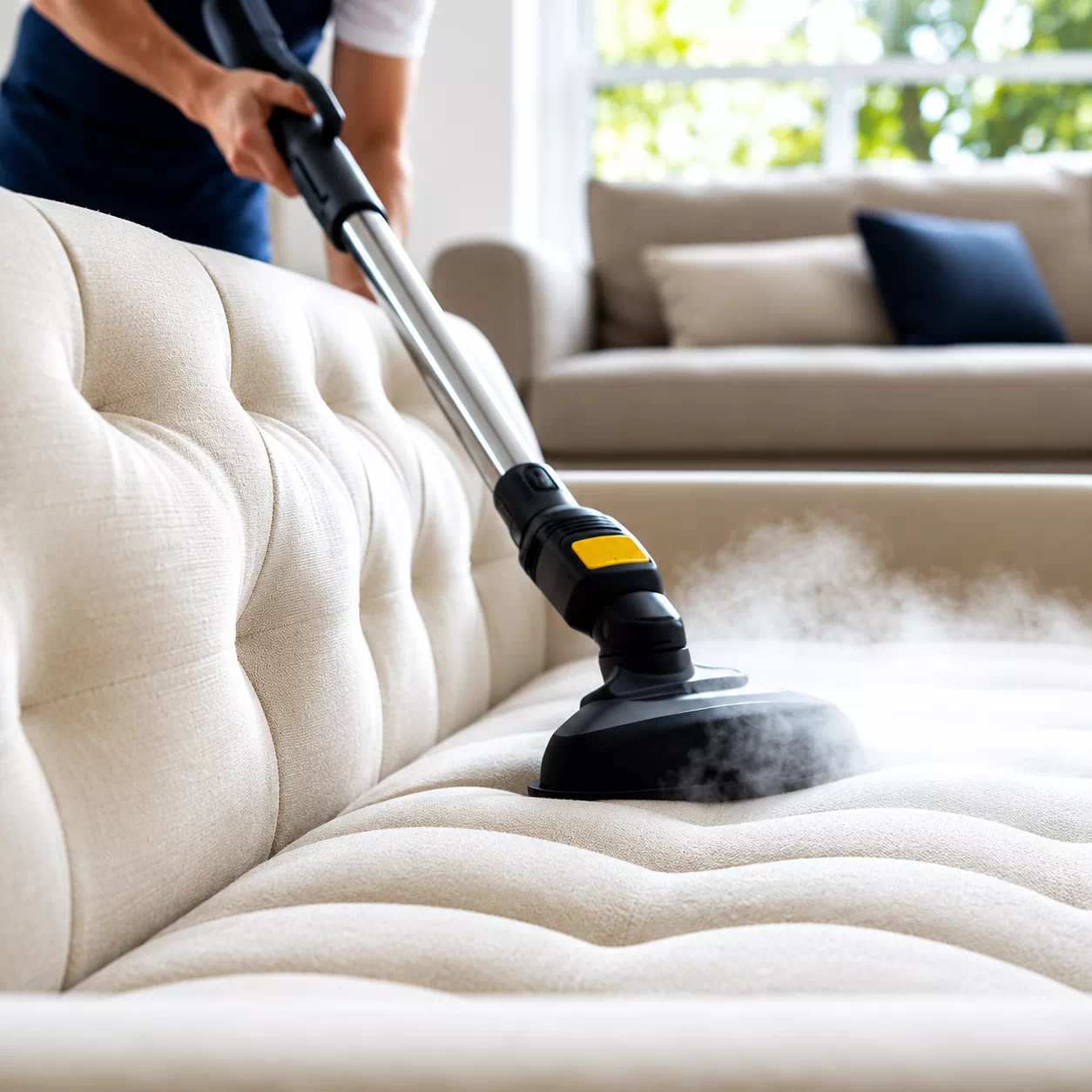
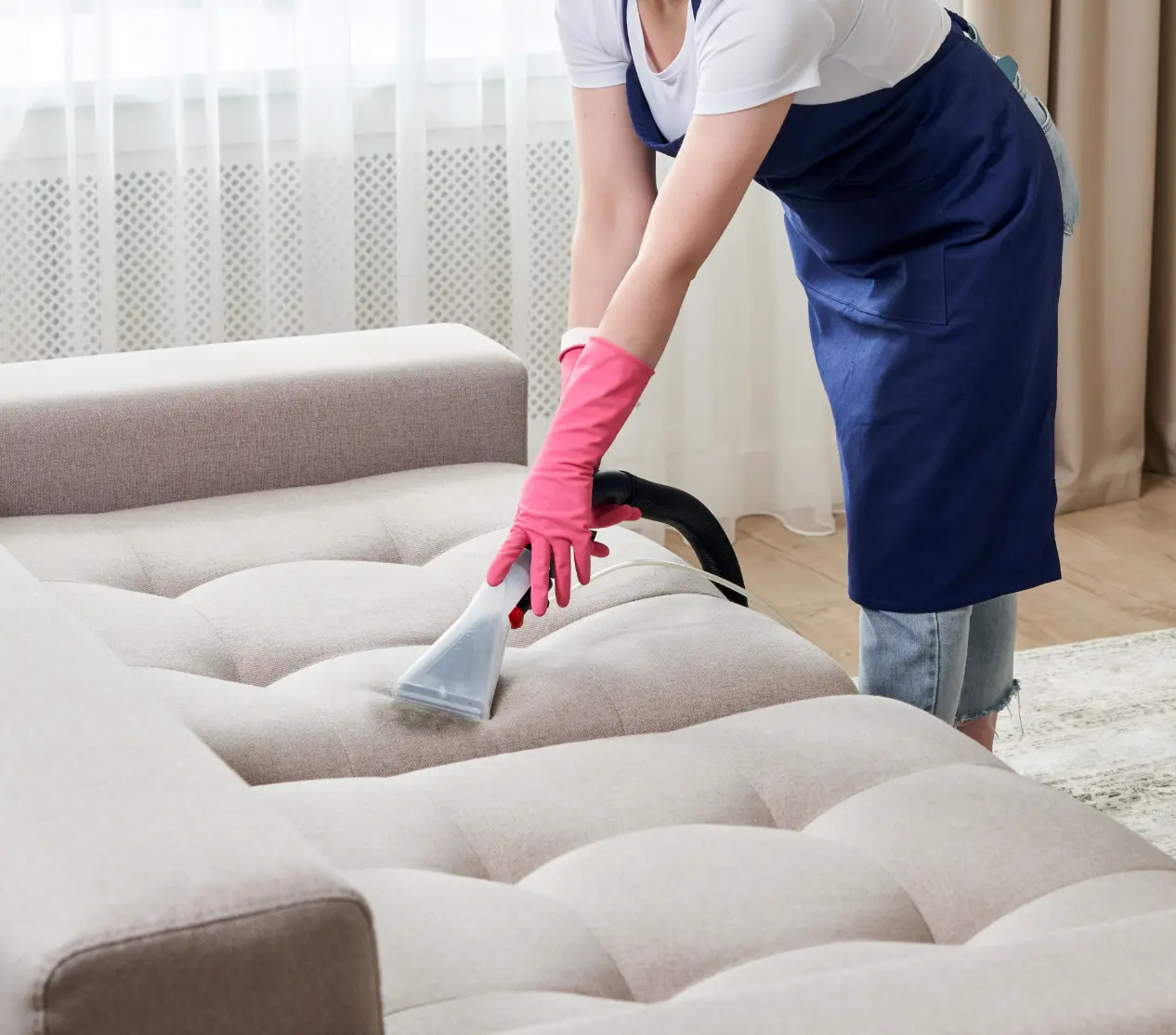
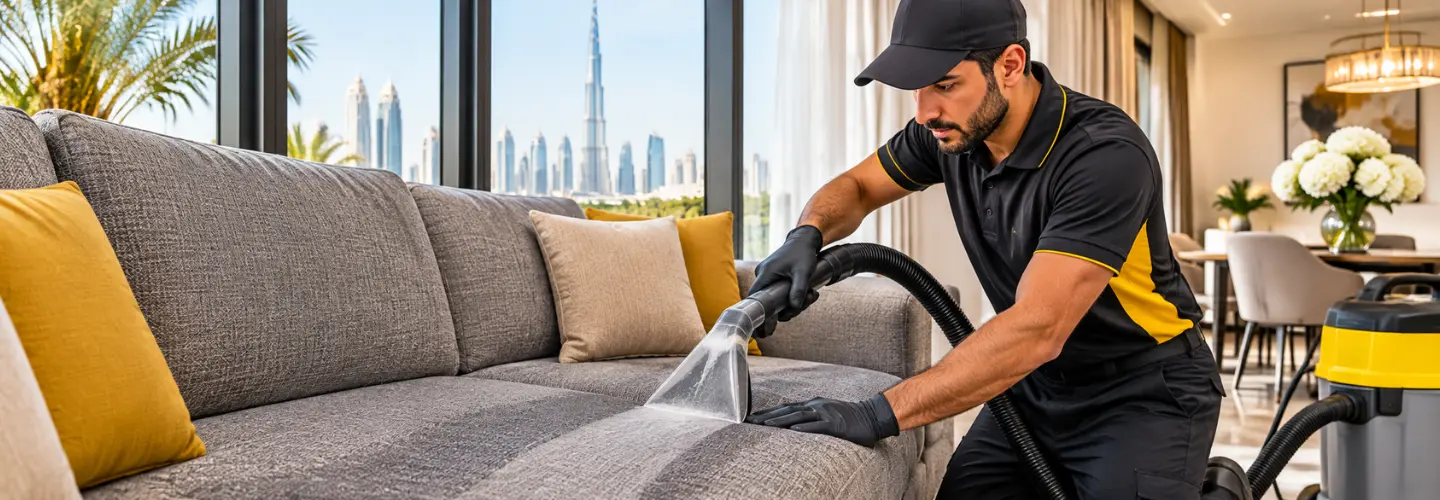
Stubborn stain that won't budge? Our sofa cleaning uses hot-water extraction and a triple-filtration process to lift dirt, oils and stains from deep in the fabric and padding, then dries it quickly so odours don't set in. Prices start from AED 100 + VAT for a 2-seater. |
Mistakes that make sofa stains worse
• Scrubbing hard, which spreads the stain and damages the pile.
• Using bleach or strong household sprays, which can strip colour and leave residue.
• Soaking the cushion, which pushes the stain into the padding and leaves water rings.
• Removing cushion covers to machine-wash them when the label doesn't allow it. They can shrink and stop fitting.
• Mixing products, which can react with each other and the fabric.
|
📊 The UAE pet care market was valued at USD 24.4 million in 2024 Nexdigm reports the market is growing at a CAGR of 6.4% to 2030, driven by rising pet ownership. More pets in Dubai homes means more hair, accidents and odours on sofas, the kind of stains that often need enzyme treatment or a professional deep clean. |
When to call a professional sofa cleaner
Home methods work well on fresh, small spills. Call a professional when:
• The stain has dried, set or been treated with the wrong product.
• The fabric is coded X, or is velvet, silk or another delicate material.
• There is a smell that returns, especially from pets.
• The whole sofa looks dull, greyed, or patchy.
• Someone at home has allergies, and you want the dust and allergens extracted, not just the marks.
At The Clean Freak, we match the method to the fabric and test a hidden area before we start. Leather is cleaned and conditioned rather than steam-cleaned. We treat stains and odours wherever possible. Very old, set-in marks may not disappear entirely, and we will tell you what to expect before we begin. Current prices are AED 100 + VAT for a 2-seater, AED 150 + VAT for a 3-seater, AED 200 + VAT for a 4-seater, and AED 250 + VAT for an L-shaped or corner sofa (5-seater).
How to keep your sofa stain-free for longer
Prevention is easier than removal. Use washable throws on the seats people use most, keep a dry white cloth handy in the living room, and vacuum the sofa weekly with an upholstery attachment to stop dust grinding into the fibres. For most Dubai homes, a professional sofa clean every six months keeps fabric fresh. Homes with pets or young children often benefit from every three to four months.
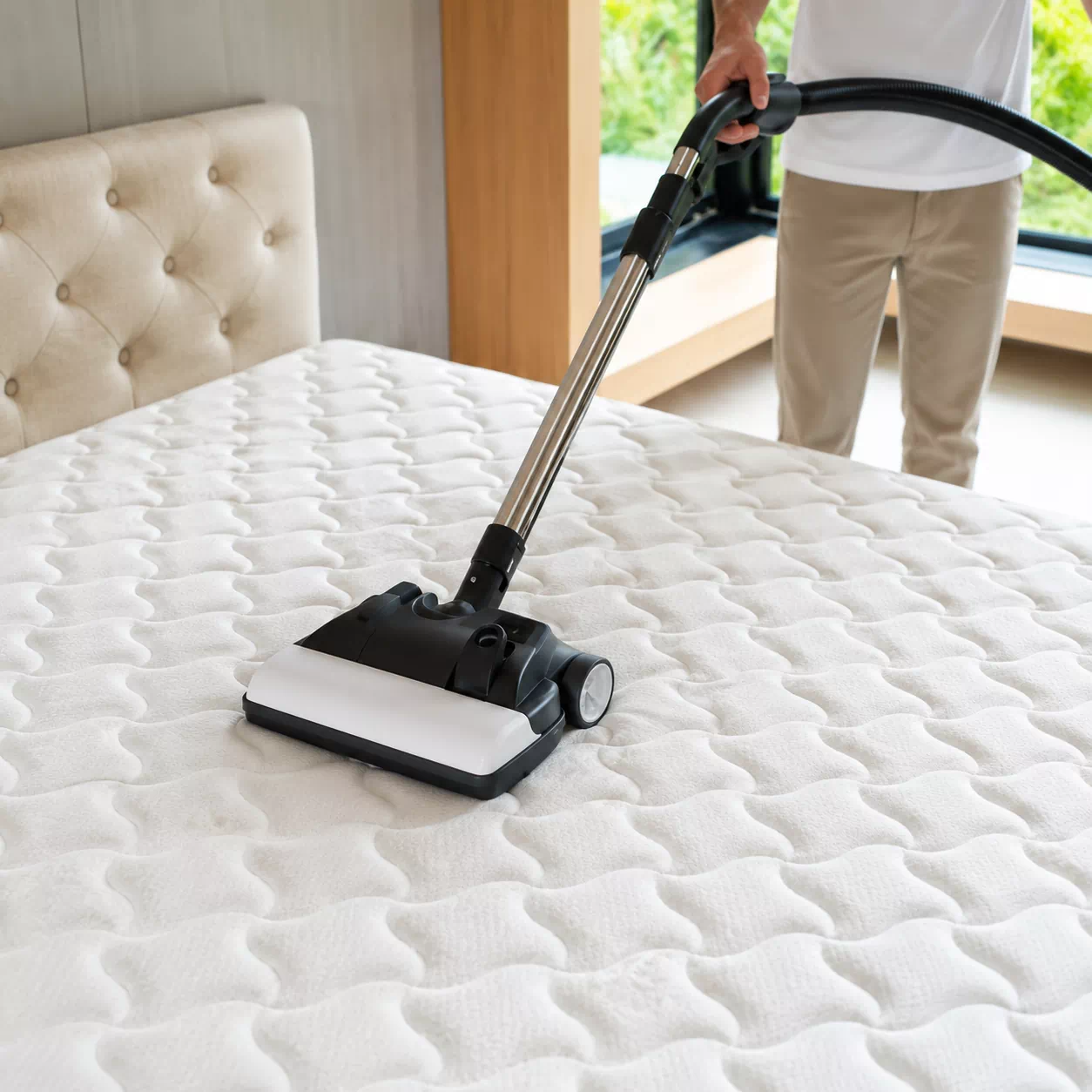
Soft furnishings collect the same dust and skin cells, so it makes sense to plan them together. Our mattress cleaning service removes allergens from the bed, and our guide on how often to clean carpets in Dubai helps you set a simple schedule for the floors.
|
Why Dubai homeowners choose The Clean Freak We bring 40 years of British cleaning expertise to Dubai, so your sofa gets a deep, fabric-safe clean at a fair, transparent price. ✓ Fabric-safe hot-water extraction with a fast-dry finish ✓ Non-toxic products safe around children, pets and allergy-sensitive homes ✓ Fully trained, insured technicians and clear quotes with no hidden fees ✓ Free site visit and quote, with same-day booking available on many jobs |

Frequently asked questions
What is the best homemade sofa stain remover?
For most water-safe fabrics (code W or W/S), a few drops of mild dish soap in cool water works well. Add a tablespoon of white vinegar for coffee, tea or wine. Always test on a hidden area first.
Can baking soda remove sofa stains?
Baking soda is useful for absorbing grease and neutralising odours. Sprinkle it on, leave it for 15 to 20 minutes, then vacuum. It works best alongside a gentle soap solution.
How do I get old stains out of my sofa?
Old, dried stains are hard to lift with home products and can spread if over-treated. Professional hot-water extraction gives the best chance of removing them, though some set-in marks may only fade.
Is it safe to steam clean any sofa?
No. Leather and some delicate fabrics should not be steam-cleaned. Always check the cleaning code. Professionals choose the method based on the material.
How long does a sofa take to dry after professional cleaning?
Most sofas take around four hours to clean, depending on size and condition. With a fast-dry finish, the sofa is usually ready to use again within a few hours.

Deal with spills fast, and know when to hand over
Most sofa stains come out if you act quickly, check the cleaning code, and use the right gentle solution. Blot, test, work from the outside in, and keep the fabric from getting too wet. When a stain has set, the fabric is delicate, or the whole sofa needs a refresh, professional cleaning protects a piece of furniture that costs far more than the clean. Learn more about The Clean Freak or book your clean today.